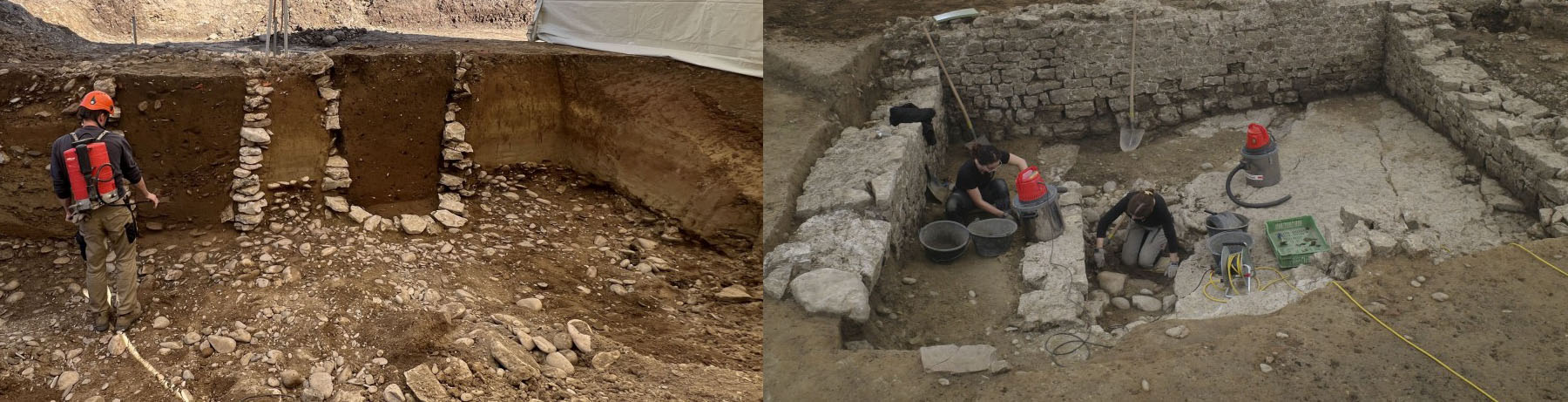
A few weeks ago, a remarkable discovery was reported in Kaiseraugst, Switzerland: a well-preserved Roman road along with adjacent buildings. In addition to various artifacts, archaeologists also uncovered several infant burial sites. The burial of small children in or near the home was not uncommon. Traditionally, people were cremated and buried outside city boundaries, but these infants were neither cremated nor interred outside city boundaries. It is thus very clear that there were very different standards and requirements for adults and children, but how different were they exactly? And how different was the Roman system from our modern system?
Many of the differences between adults and children and between the Roman world and ours stem from an incredibly high infant mortality rate. For Roman families, having children involved a significant risk, creating a very different approach to childhood. Children would not be named for quite a few days in fear that they would die before then. And mothers often died in childbirth. These differences meant that Romans had to care for and raise their children in a fundamentally different manner. Life for a Roman child was much less protected, and childhood passed more quickly. The Romans marked the transition to adulthood much earlier—by four years for boys and six for girls—compared to modern standards.
For people today, becoming pregnant is essentially a guarantee of getting a child who will live until death by old age unless an unexpected accident occurs. The risk of death for the mother is practically nothing. And so our views on children are drastically different. Today, we often use 18 as a benchmark for adulthood.
This difference in safety levels has led to some major differences. In modern society, children are much more valued and cared for. Parents begin planning for their child’s life even before birth, choosing names, designing nurseries, and setting expectations for the future. Because child survival is almost guaranteed today, there’s more emotional investment and a stronger push to protect and nurture children through long, structured childhoods. But in Rome, it was different. The high risk of death, especially in infancy, meant that parents had to be more cautious about becoming attached. Children weren’t named for several days, and their early years weren’t seen as a protected stage of life. Instead, childhood passed quickly, and expectations for contributing to the household started much earlier. This major shift in safety changed not just how children were raised, but how societies thought about childhood itself.