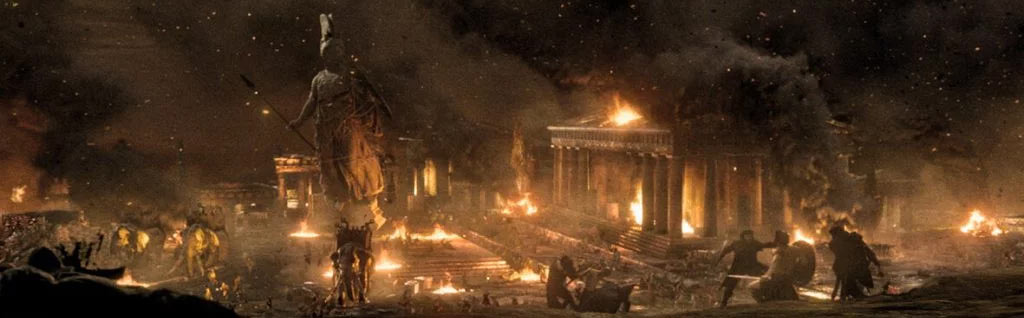
In 356 BC, a man by the name of Herostratus lit fire to the temple of Artemis at Ephesus, one of the 7 wonders of the ancient world. The temple would burn to the ground and Herostratus would be sentenced to death. But, you might be wondering why a seemingly ordinary man would seek to burn down one of the world’s largest temples. Simple, Herostratus desired fame and thought that burning a world-famous temple would do the trick.
The temple of Artemis at Ephesus wasn’t just an ordinary building or temple. The temple with 127 columns at around 60 feet tall each was a marvel of engineering larger than the famous Parthenon in Athens. It was both a religious hub and a world-renowned tourist destination, with people traveling from all across the Mediterranean to see the wonder. In addition, it was a major point of civic pride for the city of Ephesus, making its burning all the more devastating.
To combat the arson, the Ephesians not only sentenced Herostratus to death, but also sentenced his name to death. They attempted to erase his name completely so that he would not be remembered and would thus prevent him from achieving his goal. To their dismay, many writers faithfully recorded Herostratus’s story due to the decree.
What makes the story even more interesting is that the burning of the temple occurred on the same night as the birth of Alexander the Great, the renowned Macedonian general who ushered in the Hellenistic age. It is said that Artemis was too busy watching over Alexander’s birth to protect her own temple, though it must be noted that this is all claimed by writers and is likely embellished.
In the end, Herostratus’s memory survived, but the temple would live on as well. The Ephesians would rebuild the temple, and it would remain in use for many more years until the rise of Christianity rendered the temple, among others, obsolete, leading to its neglect and eventual destruction.