For a long time, I’ve had an interest in restaurants. For me, they were a special place. You could enjoy a really good meal and in a great atmosphere with your loved ones. Restaurants also inject variety into mealtimes and give patrons a chance to experience food from all around the world. In addition, restaurants serve a critical social function. Restaurants often act as gathering places and social hubs for communities. Restaurants not only have important impacts on individuals but also hold significant sway over social life and community.
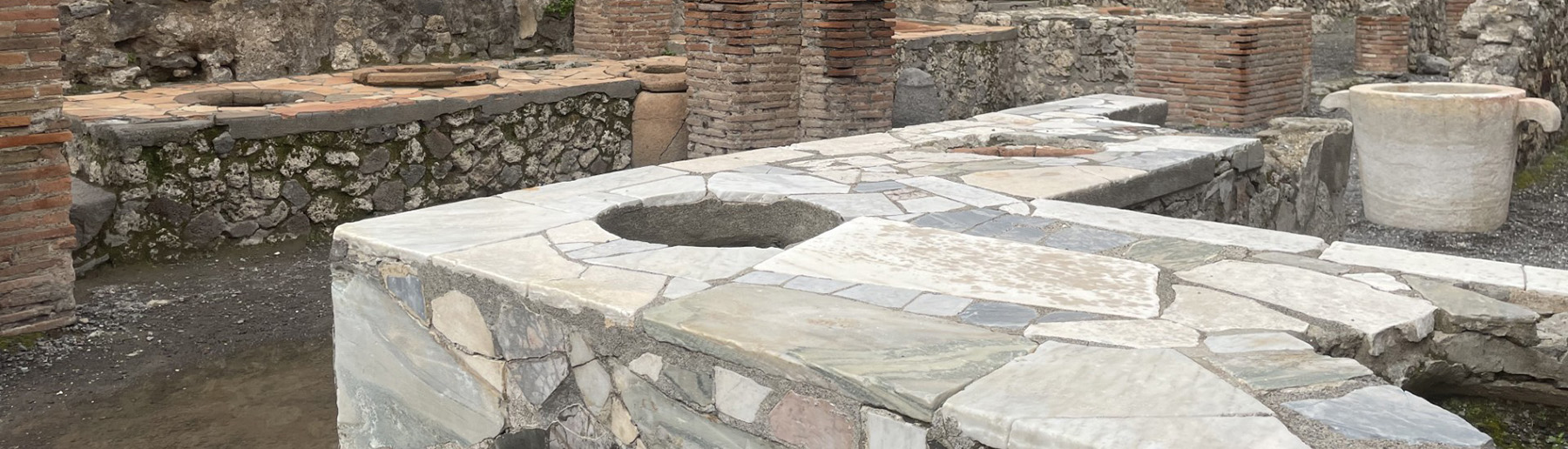
Seeing how important restaurants are, imagine my interest when I first discovered the thermopolium. The thermopolium is the Roman equivalent of a fast-food, pub-type establishment. Their most distinctive feature being a long bar with slots for dolia—basically food jars—to be placed. These jars were embedded into the counter and the structure can be seen in many Pompeiian thermopolia with broken counters. In addition, thermopolia sometimes boasted a dine-in area in the back and beautifully painted frescoes. Though most were primarily for takeout and didn’t offer a dine-in option. The food provided played a critical role though, since most Romans did not have kitchens at home due to space constraints or fear of fire.

Some dolia from Pompeii have been found with food remains, which tell us a lot about the ancient Roman diet. Remains include a variety of meats, fish, fruits, vegetables, wine, and more. These would come either hot or cold depending on the specific thermopolium. Oftentimes, the thermopolium would have a heater to warm food located near or on the long counter.
The thermopolia would often serve as ancient hubs of information as well. Social groups would sometimes be based in specific thermopolia. The servers would often act as gossip banks. Since these establishments were high volume with quick turnover, servers would meet and get information from a large quantity of individuals and they would then pass that on. Sometimes servers would become famous and attract customers from further afield, which then further increases their knowledge.
Thermopolia also served as a major source of nighttime entertainment for lower-class, urban Romans. Depictions of gambling, dice playing, arguing about chariot races, and more rowdy bar activities have been found. It was a lively place to say the least, but many elite Roman poets found the thermopolia disgusting because of those activities. Nonetheless, they served a critical function in the daily lives of the urban poor.
Many elite critics of the thermopolia, however, are not far from the mark. Employment at a thermopolium often required women to be much more like prostitutes, which certain writers echo. Female servers participated in provocative dances and acts in attempts to attract customers. Writers have said that it is right at the line before prostitution. If a woman stepped ever so slightly further from being a server they would certainly enter the brothel business. But some thermopolia seem to have gone into the brothel business. Their workers then were full prostitutes. A prime example is the thermopolium of Asellina which many speculate to have operated as a brothel.
Cover Photo by Jaylan.